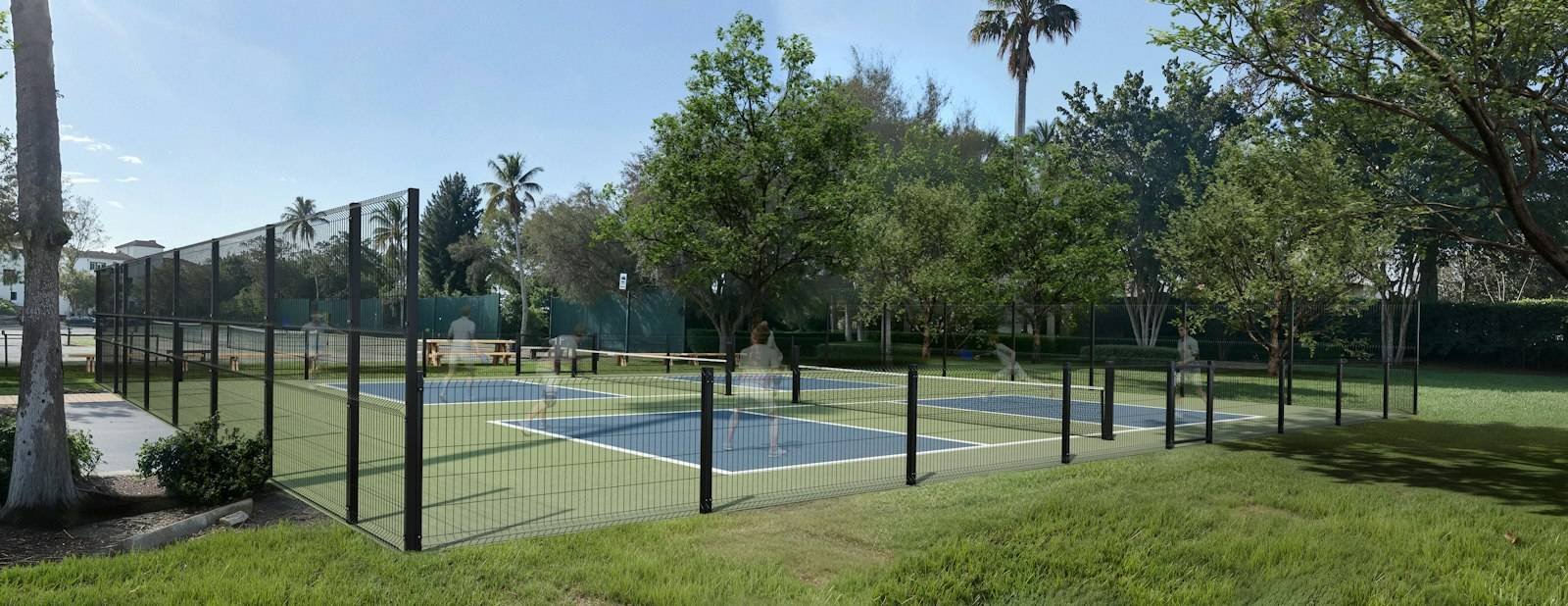
Pickleball Court Construction in Bell County, TX
Backyard courts, multi-court builds, and tennis-court conversions, from the engineered concrete slab to the last painted line. One local team, one contract, and a court that plays right on Central Texas clay.
- Free on-site estimate
- Slab + surfacing in one contract
- Mon–Sat 8am–6pm
A great court starts with a great slab
Most of what makes a pickleball court play well is hidden under the paint. The ball needs a true bounce, the surface has to shed rain in minutes, and the slab cannot crack and heave every time Bell County’s expansive clay swells and shrinks. That is concrete work, and it is what we do every week across Bell County.
Bell County Concrete Pros plans your court, prepares the base, and pours a reinforced or post-tensioned slab built for local soil. Then we bring in a sport-surfacing crew for the cushioned or standard acrylic system, colors, and lines, and install the nets, fencing, and lights you choose. You deal with one company from the first site visit to the first game.
Whether it is a single court behind your house in Temple, a pair of courts for a Belton HOA, or a church or school complex in Killeen or Harker Heights, the process is the same: measure, engineer, pour, cure, surface, play.
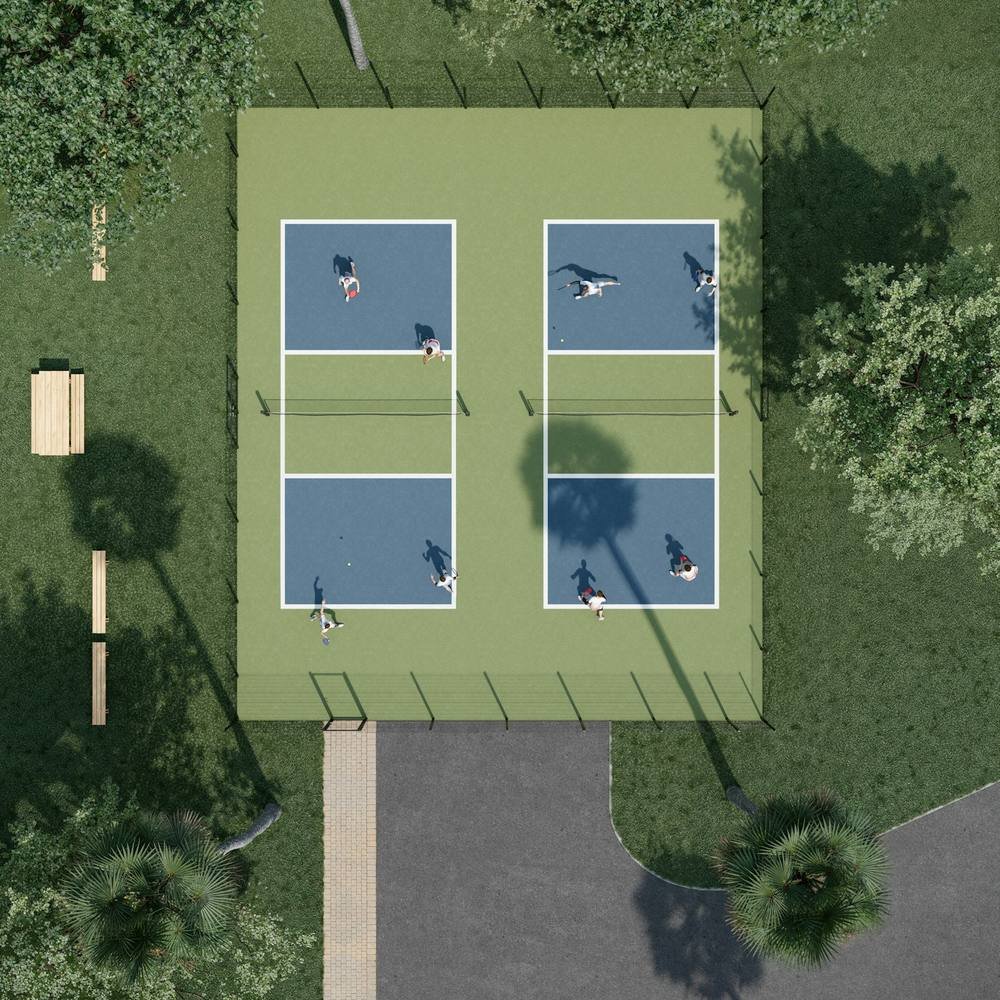
Built to play right and last
Every court we build is planned around how you will use it, how the water moves on your lot, and how the soil under it behaves.
One point of contact
We manage the slab, surfacing, and add-ons, so you are not juggling three contractors and three schedules.
Built for Bell County clay
Proper base prep, compaction, and reinforcement keep the slab stable through Central Texas wet and dry swings.
Drains in minutes
Courts are graded to a gentle, even slope of about 1% in one direction, so rain runs off without affecting the bounce.
Pro acrylic surfacing
Multi-coat acrylic systems give consistent bounce, good traction, and UV-stable color in your choice of court colors.
Lines laid out to spec
A 20 x 44 foot court, a 7 foot non-volley zone, and a net 36 inches at the posts and 34 inches at center.
Add-ons when you want them
Fencing, windscreens, LED court lights, benches, and shade can go in now or be planned in for later.
From bare ground to first serve in four steps
Most of the calendar is cure time. Crews are on site for only part of it.
- Week 1
Free consult & layout
We walk the site, measure, check grade and drainage, and recommend court size, orientation (north-south cuts sun glare), and slab type. You get a written, itemized quote.
- Weeks 1–2
Site prep & slab pour
Clear and grade, compact the base, set forms, rebar or post-tension cables, and net-post sleeves, then pour a broom-finished slab to an even 1% slope.
- Weeks 2–5
Cure & acrylic surfacing
The slab cures before coatings go on. Then the surfacing crew applies filler, color coats, and texture in the colors you pick, weather permitting.
- Final days
Lines, nets, fence & lights
Precision line striping, a permanent net system, and any fencing, windscreens, or LED lighting you added. Then we walk the court with you.
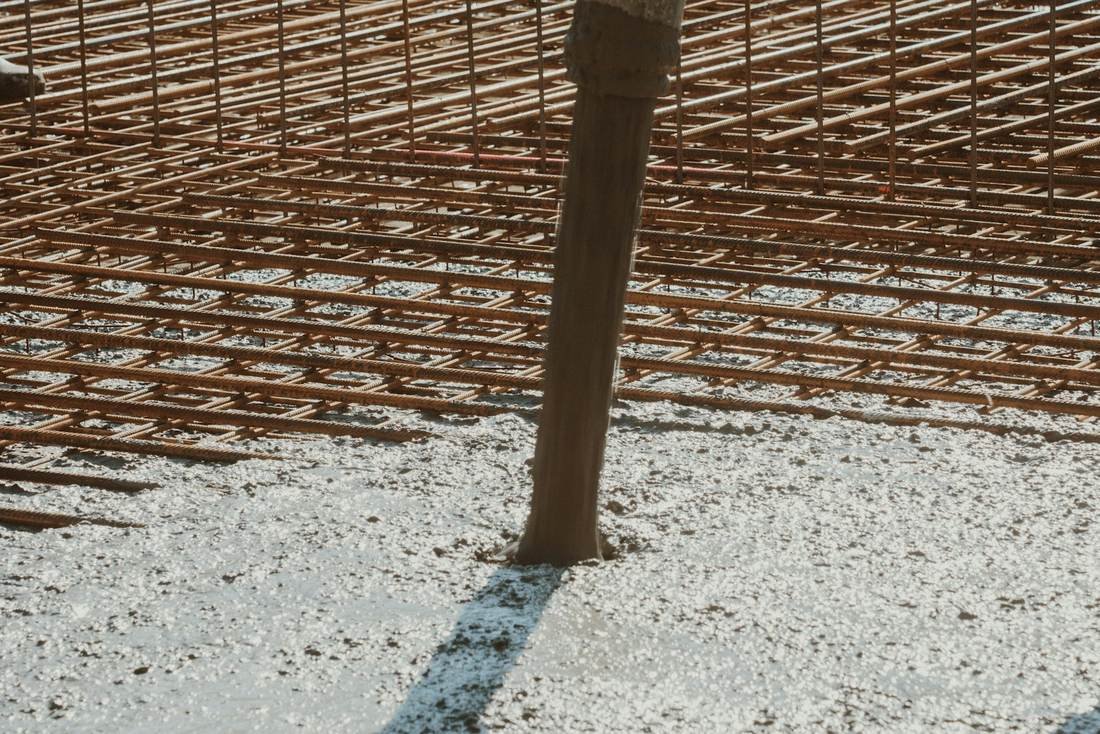
What goes under the court
- Compacted base. Topsoil and organics come out, and a compacted base goes in so the slab is supported evenly.
- Reinforcement. A rebar grid for budget-friendly builds, or post-tension cables where crack resistance matters most, such as under acrylic and on multi-court slabs.
- 4 inch minimum slab. Poured and finished for coatings to bond, with joints planned so they stay out of the playing lines wherever possible.
- Vapor barrier and drainage. Moisture control below the slab and a graded surround so water is carried away from the court, not onto it.
- Net-post sleeves and footings. Set during the pour so posts, fence lines, and light poles land exactly where the layout says.
Pickleball courts for homes and communities
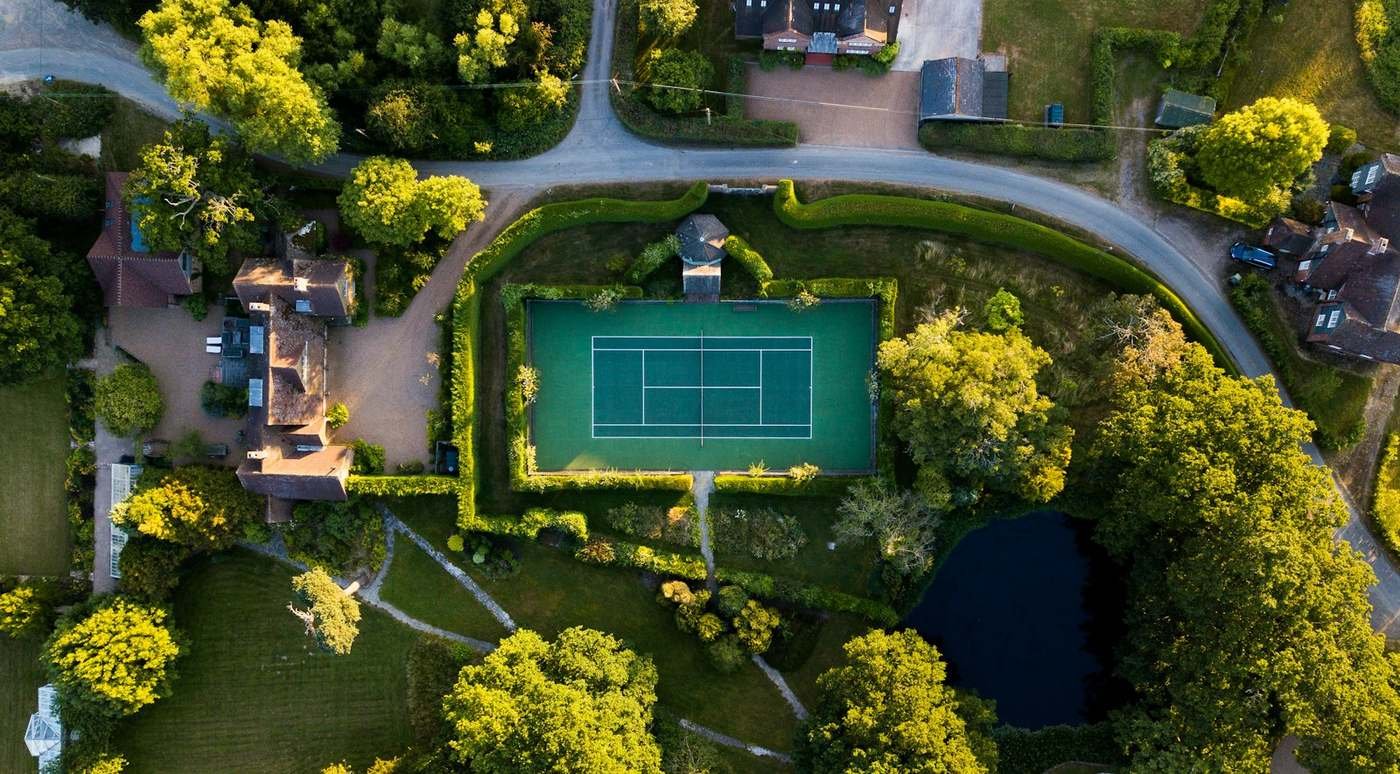
Backyard single court
A private court sized to your lot, typically a 30 x 60 or 34 x 64 foot pad, with your choice of colors, a permanent net, and optional fencing and lights.
Short on space? We can lay out a 30 x 50 foot recreational court.
Multi-court builds
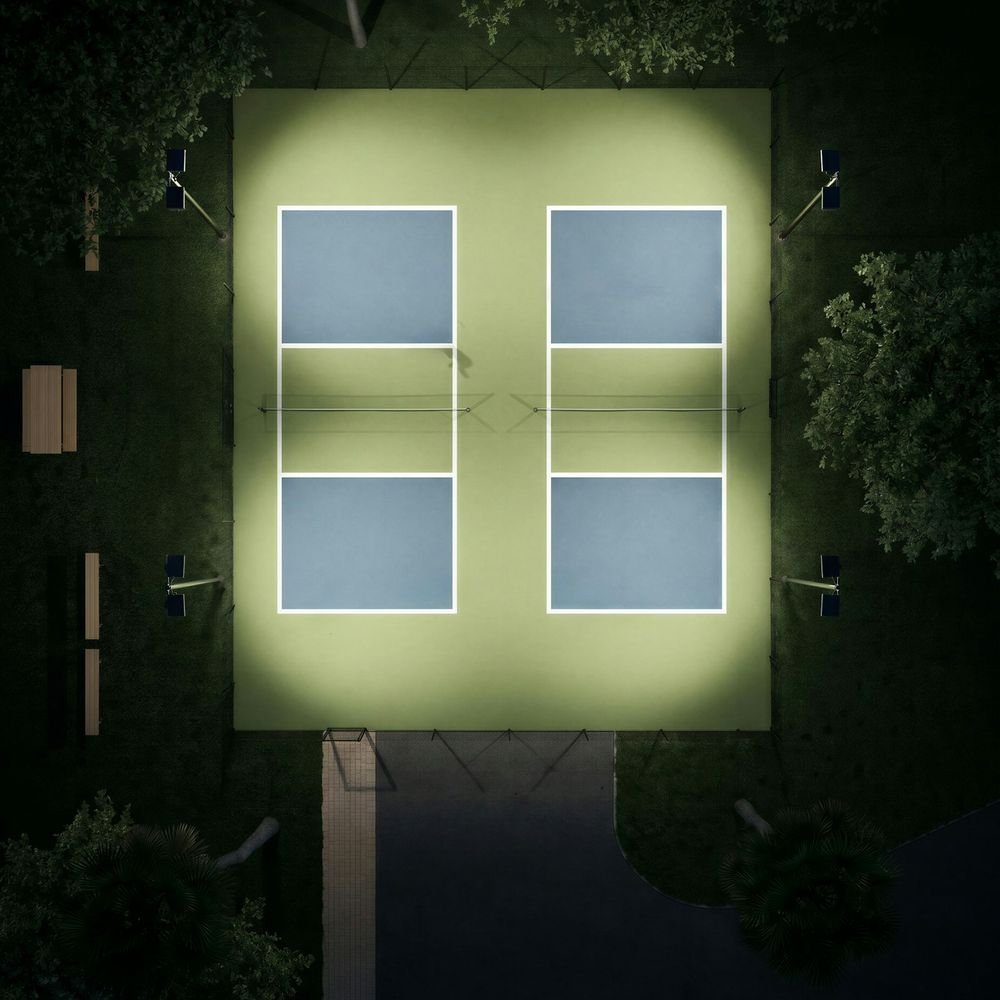
Two or more courts on one slab, with shared fencing, divider netting, lighting, walkways, and seating. We provide a written scope you can take to your board or committee.
Tennis court conversion
An old tennis court footprint is big enough for up to four pickleball courts. We repair cracks and low spots, resurface, and either stripe dedicated pickleball courts or add pickleball lines over tennis for shared play.
Resurfacing & repair
Faded color, cracks, or puddles? We assess the slab, handle concrete repair where needed, then have the court cleaned, patched, recoated, and re-lined.
Pickleball court dimensions and slab sizes
The playing court is the same for singles and doubles. What changes is how much run-off room you leave around it, and that sets the size of the concrete pad. For slope, slab thickness, and reinforcement details, see our pickleball court dimensions and slab specs guide.
| Layout | Pad size | Area | Best for |
|---|---|---|---|
| Tight-fit court | 30′ × 50′ | 1,500 sq ft | Smaller yards, casual play (not regulation) |
| Standard single | 30′ × 60′ | 1,800 sq ft | Most backyards |
| Recommended single | 34′ × 64′ | 2,176 sq ft | Comfortable play, room for fencing |
| Two courts | 60′ × 64′ | 3,840 sq ft | HOAs, churches, active families |
Court: 20 x 44 ft; non-volley zone 7 ft each side of the net; net 36 in. at the posts and 34 in. at center (USA Pickleball). Pad sizes are common builder layouts; two-court pads vary with divider spacing.
What does a pickleball court cost in Central Texas?
Every site is different, so treat these as planning ranges from published 2026 cost guides, not a quote. A flat, easy-access lot with a single standard court lands toward the low end. Heavy grading, post-tension concrete, cushioned surfaces, fencing, and lights push it higher. We price your exact court after a free site visit, with each line item written out so you can compare apples to apples.
| Project | Approx. range | Source |
|---|---|---|
| New single court from bare ground, Central Texas | $20,000–$45,000 | Pro Court Surfaces (Austin), 2026 |
| Standard 30 x 60 court, national average range | $20,000–$50,000 | HomeGuide, 2026 (average about $34,000) |
| Concrete pad only, 30 x 60 to 34 x 64 | $9,000–$25,000 | HomeGuide; Pro Court Surfaces |
| Resurface an existing court slab | $6,000–$14,000 | Pro Court Surfaces, 2026 |
| Convert a tennis court to pickleball | $8,000–$18,000 | Pro Court Surfaces, 2026 |
| Fencing around one court (optional) | $2,000–$6,000 | HomeGuide, 2026 |
| LED court lighting (optional) | $5,000–$10,000+ | HomeGuide, 2026 |
Sources: Pro Court Surfaces, Backyard Pickleball Court Guide (2026); HomeGuide, Pickleball Court Cost (Jan. 2026). Ranges are approximate and are not a quote.
Local concrete people who build courts the right way
Court builders from Austin and Dallas cover a lot of ground. We live and pour here, and we know what Bell County soil does to a slab that was rushed.
Slab expertise first
Driveways, patios, and flatwork on Bell County clay are our everyday work. Your court gets the same base prep, reinforcement, and joint planning.
Itemized written quotes
Site prep, concrete, surfacing, lines, nets, fence, and lights each priced on their own line. No vague lump sums.
One contract, one schedule
We coordinate the surfacing crew and any fence or lighting installers, so you are never stuck in the middle.
Close by
Free estimates are usually scheduled within one to two business days anywhere in Bell County.
Pickleball courts across Bell County and Central Texas
We build residential courts and community courts throughout Bell County, plus nearby Coryell, McLennan, and Williamson County projects. Homeowners, HOAs, churches, private schools, ranch and lake properties, and parks departments are all welcome.
See our full Bell County service area, or pair your court with a patio or hardscaped walkway and seating area.
Local guides: pickleball courts in Temple, Killeen & Harker Heights, and converting a tennis court, sport court, or driveway.
- Temple, TX
- Belton, TX
- Killeen, TX
- Harker Heights, TX
- Salado, TX
- Troy, TX
- Nolanville, TX
- Morgan’s Point Resort, TX
- Little River-Academy, TX
- Holland, TX
- Waco, TX
- Georgetown, TX
- Round Rock, TX
Get a Free Pickleball Court Quote
Tell us about your yard or facility and we will reply within one business day with a plan and a price range.
Pickleball court construction questions
How much does it cost to build a pickleball court in Bell County?
Published 2026 guides put a professionally built single court from bare ground at roughly $20,000-$45,000 in Central Texas and $20,000-$50,000 nationally, with an average near $34,000. Resurfacing an existing slab or converting a tennis court costs much less. Your site, slab type, and add-ons set the real number, so we give you a written, itemized quote after a free site visit. See our backyard pickleball court cost guide for the full breakdown.
How much yard space do I need for a pickleball court?
The court itself is 20 x 44 feet. Builders treat a 30 x 60 foot pad (1,800 sq ft) as the practical minimum for one court and 34 x 64 feet (2,176 sq ft) as the comfortable size. If space is tight, a 30 x 50 foot pad still plays well for recreation, though it is not regulation.
Do I need a post-tensioned slab, or is a rebar slab enough?
Both work. A reinforced rebar slab costs less but can show hairline cracks over time that telegraph through an acrylic surface. A post-tensioned slab uses tensioned steel cables to hold the concrete together, resists cracking better, and is often preferred under acrylic and for multi-court builds, at roughly twice the cost of rebar. On Bell County clay we look at the soil and drainage before recommending one.
How long does it take to build a backyard pickleball court?
Plan on about five weeks from start to first serve. Site prep and the concrete pour usually take one to two weeks, the slab then cures for several weeks before coatings go on (some surfacing systems call for a full 28 days), and the acrylic surface and lines take three to five days, weather permitting.
Can you convert our old tennis court into pickleball courts?
Usually, yes. A standard tennis court footprint is about 60 x 120 feet, which is enough room for up to four pickleball courts, or you can keep tennis and add pickleball lines for shared play. The existing slab has to be checked for cracks, low spots, and drainage first, then repaired and resurfaced.
Can you put a court on my existing patio or driveway slab?
Only if the slab is big enough, at least 4 inches thick, structurally sound, and close to level. Most patios are too small for a full court, but an existing sport slab can often be repaired and resurfaced instead of replaced.
Do I need a permit or HOA approval?
Often, yes. Cities and HOAs set their own rules for large slabs, fencing, setbacks, and lighting, so check with your city and HOA before you build. We provide a layout with court location, dimensions, and fence and light details that you can submit for approval.
Who actually builds the court?
Bell County Concrete Pros manages the whole project under one contract. Our concrete crew handles the base and slab, and we bring in an experienced sport-surfacing crew for the acrylic coatings and lines, plus fencing and lighting installers when your project includes them. You get one schedule, one written scope, and one number to call: (254) 500-3913.
Ready to plan your court?
Tell us about your yard or facility and we will set up a free on-site estimate. Send a few photos by text and we can talk layout before we visit.
Bell County Concrete Pros · 3671 Wild Buck Run, Temple, TX 76502 · Mon–Sat 8am–6pm