Converting a Tennis Court, Sport Court, or Driveway to Pickleball in Central Texas
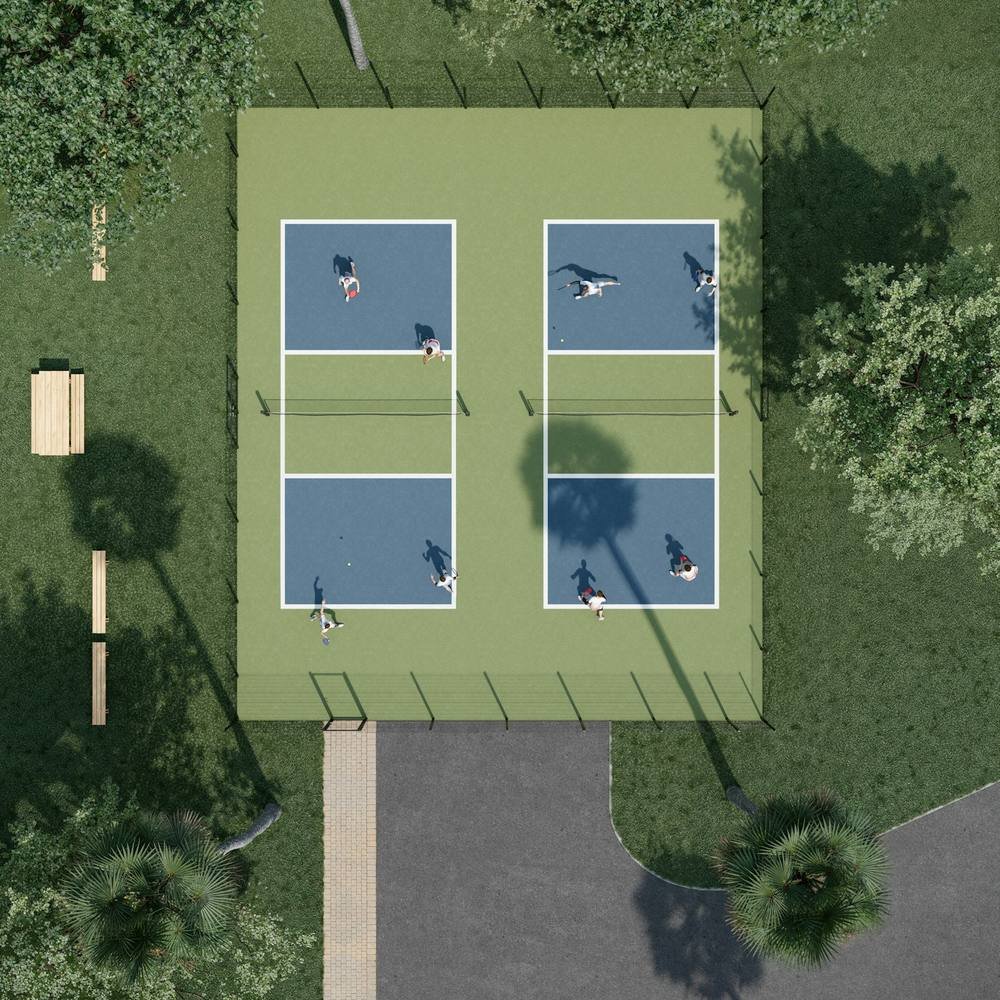
Quick answer: a sound tennis court is the best head start you can have. A 60 × 120 foot tennis pad fits up to four pickleball courts, and a Central Texas surfacer prices conversions at about $8,000–$18,000 (Pro Court Surfaces, backyard court guide (2026)), versus roughly $20,000–$45,000 for a new court from bare ground (Pro Court Surfaces, backyard court guide (2026)). Sport-court slabs are often a quick restripe. Driveways work for casual play with tape and a portable net, but rarely make a good permanent court.
Before you pour a new slab, look at what is already in your yard, at your church, or in your HOA’s amenity center. In Bell County, plenty of tennis courts sit half-used while pickleball players wait for open courts. The City of Killeen made exactly this move in 2025, approving a $25,000 project to turn one tennis court at Long Branch Park into four pickleball courts (KXXV, Pickleball courts are coming to Killeen). Here is how to tell whether your slab is a good candidate, and what each kind of conversion involves.
Step 1: Check the slab before you plan the lines
New paint will not fix a bad slab, and on Central Texas clay, problems underneath tend to come back. Walk the court with this checklist:
- Size. One court needs 20 × 44 feet of lines and ideally a 30 × 60 foot pad. Industry guidance cited by the USTA recommends at least 8 feet between a pickleball baseline and any permanent fixture, such as a fence or post.
- Cracks. Hairline shrinkage cracks are normal and fixable. Cracks wider than a credit card, cracks with one side higher than the other, or cracks that reopened after an earlier repair point to soil movement.
- Low spots. Hose the court down or look after a rain. Puddles still standing an hour later are “birdbaths” that need patching or leveling before resurfacing.
- Drainage. Water should sheet off one side of the court, not collect at the net or along a fence line. A court should fall about 1 inch per 10 feet in one plane (Quality Court, Post-Tensioned Concrete Court Specifications).
- Thickness and edges. We look for a slab around 4 inches or more with solid edges. Broken, undermined edges usually mean erosion or heaving under the slab.
- Old surface. Peeling or blistered coatings have to come off or be ground down so new acrylic can bond.
Option A: Tennis court to dedicated pickleball courts
If tennis is rarely played, removing the tennis net and laying out dedicated pickleball courts gives the most play from the space. A full 60 × 120 foot tennis pad fits up to four courts. Each gets 2-inch lines in one contrasting color (USA Pickleball Official Rulebook), its own net system, and usually divider netting between courts so balls stay on their own court.
The work typically includes crack repair, patching low spots, cleaning and priming, acrylic resurfacer and color coats, new lines, net posts set in new footings, and any fence repair. Because the old tennis net posts sit in the middle of the new layout, their footings are cut out and the holes patched.
Option B: Keep tennis, add blended pickleball lines
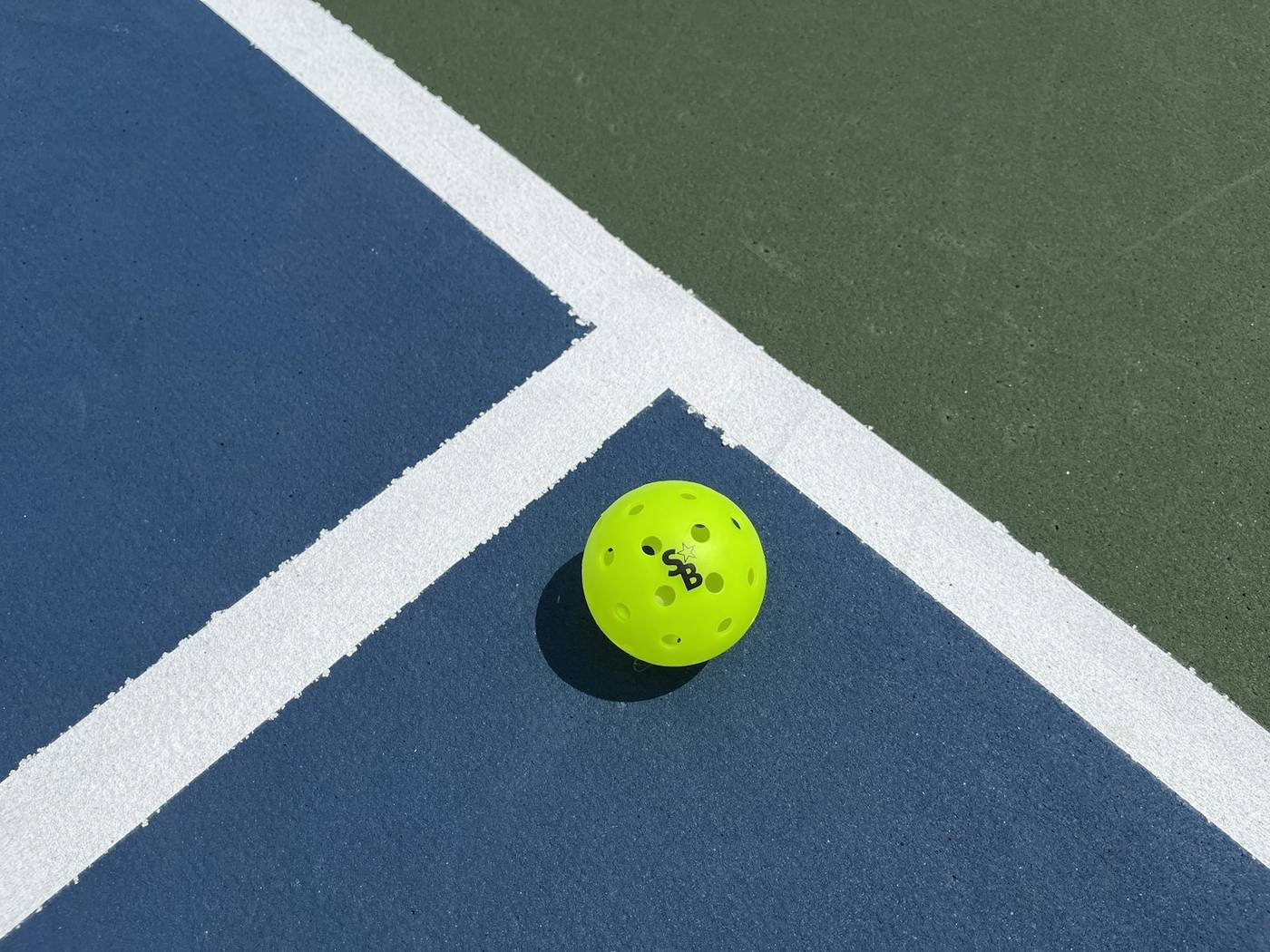
For HOAs and churches with one or two tennis courts and players of both sports, blended lines let the court do both. The USTA Statement of Guidance on Pickleball recommends:
- Up to two pickleball courts per tennis court, one on each side of the tennis net, sharing a tennis service line or baseline where possible.
- Textured line paint one shade lighter in the same color family as the court, so tennis players can ignore it.
- Blended lines 1.5 inches wide that stop 3 inches short of the tennis lines.
- Painter’s tape, not paint, for temporary lines, to protect the acrylic surface.
Pickleball players use portable nets on the blended courts, then roll them away for tennis.
Option C: Sport court or basketball slab
A backyard sport court that is already 30 × 60 or 34 × 64 feet is often the easiest conversion of all. If the surface is sound, it may need only cleaning, a color coat, pickleball lines, and permanent or portable net posts. Basketball and pickleball lines coexist well on the same slab in different colors, which keeps the court useful for kids and resale.
Option D: Driveway or patio
Driveways are tempting because the concrete is already there. A two-car driveway can be wide enough, and 20 × 44 feet is the smallest slab that still plays real pickleball (Build My Courts). But driveways are built to drain toward the street with more slope than a court should have, carry saw-cut control joints every few feet, and take tire traffic that would mark a permanent acrylic surface.
Our advice: for casual family games, use painter’s tape or temporary line paint and a portable net. If you want a real court, put it somewhere else. Most patios are too small for a full court, but a large patio can sometimes be extended into a proper pad by matching the existing slab. See our concrete patio page for that kind of work.
What conversions cost in Central Texas
| Project | Approx. cost | Source |
|---|---|---|
| Recoat an existing pickleball court (prep, coats, lines) | $3,500–$7,000 | Pro Court Surfaces resurfacing guide, 2026 |
| Resurface an existing slab as a court | $6,000–$14,000 | Pro Court Surfaces backyard guide, 2026 |
| Convert a tennis court to pickleball | $8,000–$18,000 | Pro Court Surfaces backyard guide, 2026 |
| Killeen Long Branch Park: 1 tennis court to 4 pickleball courts | $25,000 budget | KXXV, 2025 |
| New single court from bare ground | $20,000–$45,000 | Pro Court Surfaces backyard guide, 2026 |
Approximate published ranges, not a quote. For the full new-build breakdown, see our backyard pickleball court cost guide.
When to pour new instead
Conversion stops making sense when the slab is moving. If cracks keep reopening, one panel has heaved above another, or water pools across half the court, the cost of repeated repairs on Bell County clay can approach the cost of a new, properly drained slab. In that case we price both options side by side so you can compare. Our pickleball court dimensions and slab specs guide explains what a new court slab should include.
Have a court or slab we should look at?
We will check cracks, low spots, and drainage on site and tell you honestly whether to convert, resurface, or pour new, with a written quote either way.
Bell County Concrete Pros · 3671 Wild Buck Run, Temple, TX 76502 · Mon–Sat 8am–6pmFrequently asked questions
How many pickleball courts fit on a tennis court?
A standard 60 x 120 foot tennis court pad fits up to four dedicated pickleball courts if the tennis net comes out. If you want to keep tennis, USTA guidance allows up to two blended pickleball courts on a tennis court, one on each side of the tennis net.
How much does it cost to convert a tennis court to pickleball?
A Central Texas court surfacer puts tennis-to-pickleball conversions at about $8,000 to $18,000 in 2026. The City of Killeen budgeted $25,000 in 2025 to turn one tennis court at Long Branch Park into four pickleball courts. Crack repair, low spots, fencing, and nets move the price.
Can I paint pickleball lines on my driveway?
For casual play, yes, if the driveway has a clear 20 x 44 foot area. Tape or temporary paint and a portable net work well. A permanent acrylic court surface is usually not a good fit for a driveway because cars mark it and driveways are sloped to drain toward the street.
What color should pickleball lines be on a shared tennis court?
USTA guidance says blended pickleball lines should be 1.5 inches wide, textured line paint one shade lighter in the same color family as the court, and should stop 3 inches short of the tennis lines. Dedicated pickleball courts use 2-inch lines in one contrasting color.
Can a cracked tennis court be converted?
Often. Hairline and shrinkage cracks can be filled and covered by the new surface. Wide or shifting cracks on Central Texas clay tend to come back, so those slabs may need a crack-repair system, partial replacement, or a new slab. We tell you which after we see it.
Do I need a permit to convert a court?
Re-striping and resurfacing usually do not need a permit, but new fencing, new concrete, and lights often do. Rules vary by city, so check with your city and HOA. See our Temple and Killeen pages for local permit details.