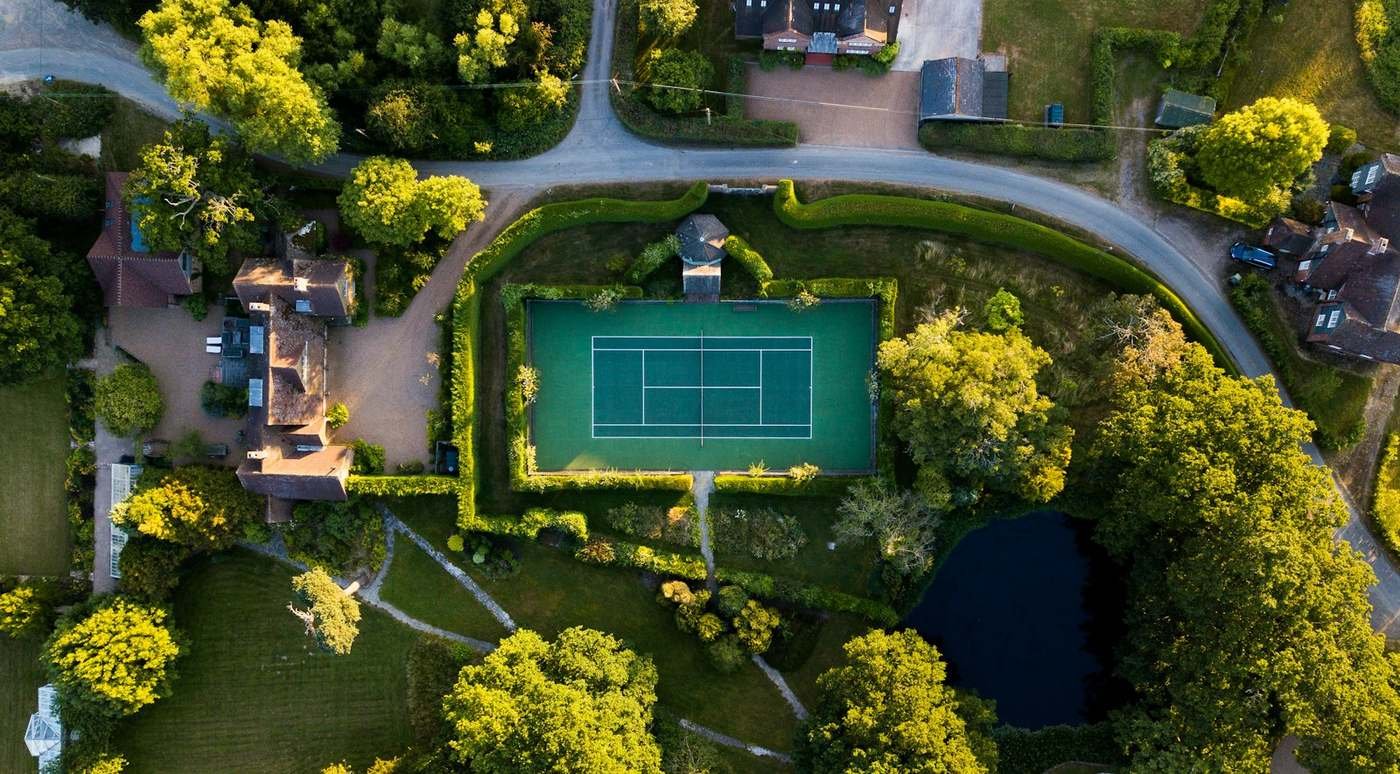
Pickleball Court Construction in Temple, TX
Private backyard courts, HOA and church courts, and conversions, built on a concrete slab designed for Temple’s blackland clay. We handle the permit drawing, the pour, the surfacing crew, and the lines.
- Free on-site estimate
- Based in Temple (76502)
- Mon–Sat 8am–6pm
Skip the reservation app
Pickleball is booming in Temple, and the city has responded. Crossroads Park on Research Parkway has six dedicated courts, and Summit Recreation Center has six lighted outdoor courts for members. Walker Park adds two shared tennis and pickleball courts on the north side.
Popular courts come with rules, though. At Crossroads, only Temple residents can reserve, reservations are one-hour blocks booked up to seven days out, each person can reserve up to three times a week, and courts 3 and 4 are set aside for instructors. Summit reservations are for active members and open two days ahead. If you play most days, or want to play at 7 a.m. before a July heat wave sets in, a court in your own yard changes the game.
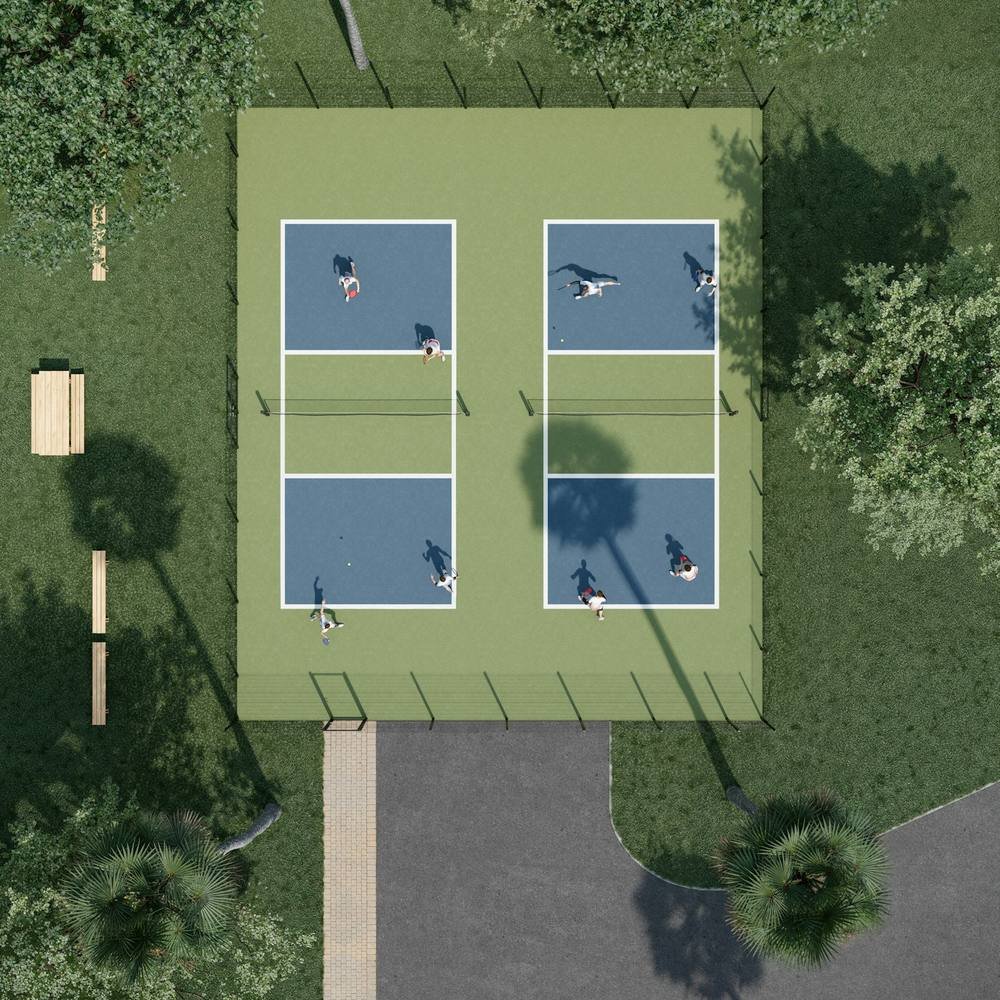
A home court also works for families, church youth groups, and neighborhood HOAs that want an amenity without sharing the city’s calendar. We build all of them, from a single 30 × 60 foot backyard pad to multi-court layouts.
Temple sits on blackland clay. Your slab has to be built for it.
Bell County is split by the Balcones Escarpment. Temple and the eastern half of the county are on the Blackland Prairie, where the most common soil is Houston Black clay. The Texas Water Development Board describes Houston Black as a classic “vertisol” that shrinks and swells markedly as its moisture changes, and notes that this very high shrink-swell potential limits building sites. In a dry August, these soils open cracks you can put your hand in. After a week of spring rain, the same ground swells back up.
A pickleball court is a large, thin, flat slab with a painted finish that shows every crack. That makes Temple clay the single biggest factor in how long your court stays smooth. Here is how we plan for it:
- Raise the pad and move the water. Court specs call for the finished subgrade to sit about 4–6 inches above the surrounding ground, with the yard graded away so no water drains across or backs up onto the court (Quality Court). Keeping water away from the slab edges is the cheapest crack prevention there is.
- Build a real base. We strip organic topsoil, compact the subgrade, and bring in a compacted select-fill or crushed-stone base where the site calls for it.
- Choose reinforcement for the soil. A post-tensioned slab puts the whole court in compression and is the preferred base under acrylic surfacing. A well-built rebar slab costs less and can work on stable ground. On active Temple clay we usually recommend post-tensioning and tell you why in the quote.
- Slope it in one plane. The court falls about an inch every ten feet, side to side, so rain drains in minutes without a slope you can feel in play.
For the full numbers on thickness, concrete strength, slope, and joints, see our pickleball court dimensions and slab specs guide.
Pickleball court permits in the City of Temple
The City of Temple lists concrete flatwork and fences among the common residential projects that require a building permit. Court lighting adds electrical work, and the city requires a state-licensed electrician to pull permits for electrical work (a homesteaded owner can sign a notarized affidavit to take that on personally). Here is how the process works, from the city’s own permit FAQ:
| Step | What happens | Typical time |
|---|---|---|
| Apply | File on MGO Connect and pick Temple, TX, not Bell County | Day 1 |
| Site plan | Survey or aerial with the court drawn in and distances to property lines, fences, and the house labeled | With the application |
| Intake | City assigns a project number and sends the fee invoice | 1–2 business days |
| Plan review | Starts once the fee is paid | About 10 business days |
| Inspections | Requested on MGO Connect or the city inspection line | Next day if before 4 p.m. |
We prepare the court layout and site-plan drawing for your application and build the review time into the schedule. If you live in an HOA, get architectural approval in parallel; most HOAs care about setbacks, fence height and color, and whether lights will spill into neighbors’ yards. If your home is outside Temple city limits, the city process does not apply, but your HOA or deed restrictions may still.
Source: City of Temple, Do I Need a Permit?. Rules change, so confirm current requirements with the city before you build.
What we build around Temple
Backyard courts
A full 30 × 60 or 34 × 64 foot pad behind the house, with a cushioned or standard acrylic surface and permanent net posts.
HOA, church & school courts
Two or more courts on one slab, with fencing, walkways, and lighting planned for shared use and neighbors.
Conversions & resurfacing
Old tennis courts, sport courts, and sound slabs repaired and resurfaced for pickleball. See converting an existing court or driveway.
Acreage near Belton Lake, Moffat, or Little River-Academy? We quote rural lots too. See all Bell County pickleball court services.
What a pickleball court costs in Temple
Published 2026 guides put a new single backyard court from bare ground at about $20,000–$45,000 in Central Texas (Pro Court Surfaces, 2026), and a standard 30 × 60 court at $20,000–$50,000 nationally, averaging about $34,000 (HomeGuide, 2026). In Temple, the swing factors are how much the lot needs to be built up and drained, whether the clay calls for post-tensioning, and the add-ons you choose: fencing, lights, and a cushioned surface.
Already have a slab? Resurfacing an existing slab as a court runs about $6,000–$14,000 in the same Central Texas guide. The full line-by-line breakdown is in our backyard pickleball court cost guide.
Get a Free Pickleball Court Quote
Tell us about your Temple yard or facility. We reply within one business day and set up a free on-site estimate.
Temple pickleball court questions
Do I need a permit to build a pickleball court in Temple?
Usually, yes. The City of Temple lists concrete flatwork and fences among the common residential projects that need a building permit, and any electrical work for court lights must be permitted by a state-licensed electrician. Permits are filed online through MGO Connect, choosing Temple (not Bell County), with a site plan that shows the court and its distance from your property lines and house. If your property is outside city limits, check with Bell County and your HOA instead.
How long does the City of Temple take to issue a permit?
The city says intake usually takes one to two business days and plan review is set at 10 business days, though that can shift with permit volume. We build that review time into the schedule so the pour date is realistic.
Is Temple’s soil a problem for a pickleball court?
It is the main thing to design around. Most of Temple sits on the Blackland Prairie, where Houston Black clay shrinks and swells with moisture. A court slab here needs good drainage, a properly prepared and compacted base, and reinforcement chosen for the soil. For many Temple yards we recommend a post-tensioned slab, which resists cracking better than a standard rebar slab.
Why build a court when Temple has public courts?
Temple has good public options, including six courts at Crossroads Park and six lighted courts at Summit Recreation Center. But resident reservations at Crossroads are limited to one-hour blocks and three per week, and Summit courts are for members. A backyard court means no reservations, no waiting, and play whenever it is cool enough outside.
How much does a backyard pickleball court cost in Temple?
Published 2026 guides put a new single court from bare ground at roughly $20,000 to $45,000 in Central Texas. Your number depends on grading, slab type, surfacing, and add-ons like fencing and lights. We give you a written, itemized quote after a free site visit.
Can you build a court on acreage outside Temple city limits?
Yes. We quote projects across Bell County, including acreage and lake-area properties around Temple. Rural sites often need more grading and a longer haul for concrete trucks, which we check during the site visit.
- City of Temple, Crossroads Park
- City of Temple, Summit Recreation Center
- City of Temple parks directory
- City of Temple, Do I Need a Permit?
- Texas State Historical Association, Bell County
- Texas Water Development Board, Houston Black state soil
- Quality Court, Post-Tensioned Concrete Court Specifications
- Pro Court Surfaces, 2026; HomeGuide, 2026
Planning a court in Temple?
Send a few photos of the spot or call us. We will walk the site, check grade and drainage, and give you a written, itemized quote. Bell County Concrete Pros manages the job and brings in a sport-surfacing crew for the coatings and lines.
Bell County Concrete Pros · 3671 Wild Buck Run, Temple, TX 76502 · Mon–Sat 8am–6pm